
You’ve done everything right. The degrees, the career, the financial stability your parents dreamed about. Yet something still feels heavy, a weight you can’t quite name but recognize in your mother’s worry, your father’s silence, your own reflexive need to be twice as good just to be seen as equal. So what is generational trauma, and why does it seem to follow Black families like an uninvited guest at every gathering?
The answer lies somewhere between our DNA and our dinner tables. Science now confirms what many of us have felt intuitively: trauma doesn’t just affect the person who experienced it. It echoes through generations, shaping how we parent, love, and protect ourselves, often in ways we never consciously chose. For Black families carrying centuries of collective wounds, understanding this isn’t about dwelling in pain. It’s about finally naming what’s been unnamed.
At From Chains to Glory, we work with Black professionals and families who are ready to examine these inherited patterns, not to assign blame, but to reclaim what survival mode took away. This article breaks down the signs of generational trauma, the research behind how it transfers across generations, and practical steps to begin healing. Because the cycle can end with you.
Why generational trauma matters in Black families
Understanding what is generational trauma requires recognizing that Black families in America have faced centuries of systematic violence, from slavery to Jim Crow to modern-day discrimination. These aren’t abstract historical facts but lived experiences that shaped how your grandparents raised your parents, and how your parents raised you. The difference between generational trauma in Black families and other communities isn’t just about severity. It’s about continuity. While other groups may have escaped specific traumatic circumstances by moving or assimilating, Black Americans have faced ongoing racial violence and exclusion that never truly stopped, just changed forms.
Your great-grandparents developed survival strategies under threats that could cost them their lives. Emotional suppression kept them safe. Teaching children to be hypervigilant prevented deadly encounters. Building walls around the family created a buffer against a hostile world. These adaptations weren’t weaknesses but brilliant responses to real danger. The problem emerges when these same strategies continue operating in your nervous system today, long after you’ve moved into spaces your ancestors couldn’t imagine accessing.
The survival skills that saved one generation can silently limit the next.
The weight of inherited hypervigilance
You might notice yourself constantly scanning rooms for threats even in safe spaces, or feeling your shoulders tense when you see police, or editing your natural personality before you’ve even decided what you want to say. These aren’t personality quirks. They’re learned responses passed down through observation and nervous system regulation. Your grandmother’s fear becomes your mother’s caution becomes your chronic anxiety, each generation translating the same core message: the world isn’t safe for us.
Black children often receive lessons about survival disguised as discipline. “Don’t talk back.” “Keep your hands visible.” “Work twice as hard.” These instructions carry life-or-death weight that white families rarely need to communicate. When you absorb these teachings without processing the fear behind them, you inherit not just the wisdom but the unresolved terror.
When protection becomes limitation
The same family structures that protected previous generations from external harm can inadvertently create internal restriction. Emotional distance that once prevented vulnerability to racist systems now prevents vulnerability in intimate relationships. The strong Black woman archetype that helped your grandmother survive leaves you unable to ask for help. The provider mentality that gave your father purpose leaves you burning out while refusing rest.
This matters because you’re trying to build generational wealth and legacy while carrying generational pain. You’re attempting to break financial cycles while emotional cycles remain unexamined. Healing generational trauma isn’t about dishonoring what came before. It’s about completing the journey your ancestors started, transforming survival strategies into thriving strategies, and creating space for your children to inherit joy instead of fear.
Signs of generational trauma in everyday life
Recognizing what is generational trauma in your daily experience doesn’t require a therapist or formal diagnosis. The signs show up in patterns that feel normal because everyone in your family does them, yet they consistently create the same painful outcomes. You might notice yourself repeating behaviors you swore you’d never adopt from your parents, or feeling inexplicably anxious in situations that objectively pose no threat. These aren’t character flaws but inherited responses that made sense in a different context.
Signs of generational trauma in everyday life

Relationship patterns that signal deeper wounds
Your romantic relationships might follow a predictable script: intense connection followed by emotional withdrawal when things get too vulnerable. You find yourself testing partners to see if they’ll stay, or pushing away the people who get closest to the real you. Many Black professionals describe feeling like they’re performing even in intimate relationships, unable to fully relax or trust that love won’t be weaponized against them.
Family gatherings reveal another pattern. Certain topics remain permanently off-limits, creating invisible boundaries everyone respects without question. Money struggles, mental health, past traumas, or family secrets get buried under jokes or deflection. The message becomes clear: we survive by not feeling too much or saying too much. This emotional restriction protects against immediate conflict but prevents genuine connection and healing.
Silence about pain doesn’t eliminate it; it just decides who has to carry it alone.
Your body keeps the score
Physical symptoms often speak what your mouth won’t. You experience chronic tension in your shoulders and jaw, digestive issues without clear medical cause, or exhaustion that sleep never fully resolves. Your nervous system stays activated even during rest, preparing for threats that aren’t coming. This constant state of alert burns through your energy reserves, leaving you depleted despite doing everything right on paper.
Sleep disturbances tell their own story. Difficulty falling asleep or staying asleep becomes your baseline, along with dreams about being chased, trapped, or needing to protect someone. Your body learned hypervigilance before your conscious mind could question whether it’s still necessary.
How generational trauma gets passed down
Understanding what is generational trauma means examining both biological and behavioral pathways that carry pain across generations. The transmission isn’t mysterious or inevitable. It operates through specific, identifiable mechanisms that science can now measure and explain. Your body and brain inherited more than physical features from your ancestors. They also received chemical markers and neural patterns shaped by the traumatic experiences those ancestors endured.
Epigenetics: when trauma changes your biology
Research reveals that severe stress and trauma can alter gene expression without changing the DNA sequence itself. These epigenetic changes act like switches that turn genes on or off, affecting how your body responds to stress. Studies on descendants of Holocaust survivors and famine victims show these modifications passing to children and grandchildren, creating heightened stress responses in people who never experienced the original trauma.
Epigenetics: when trauma changes your biology
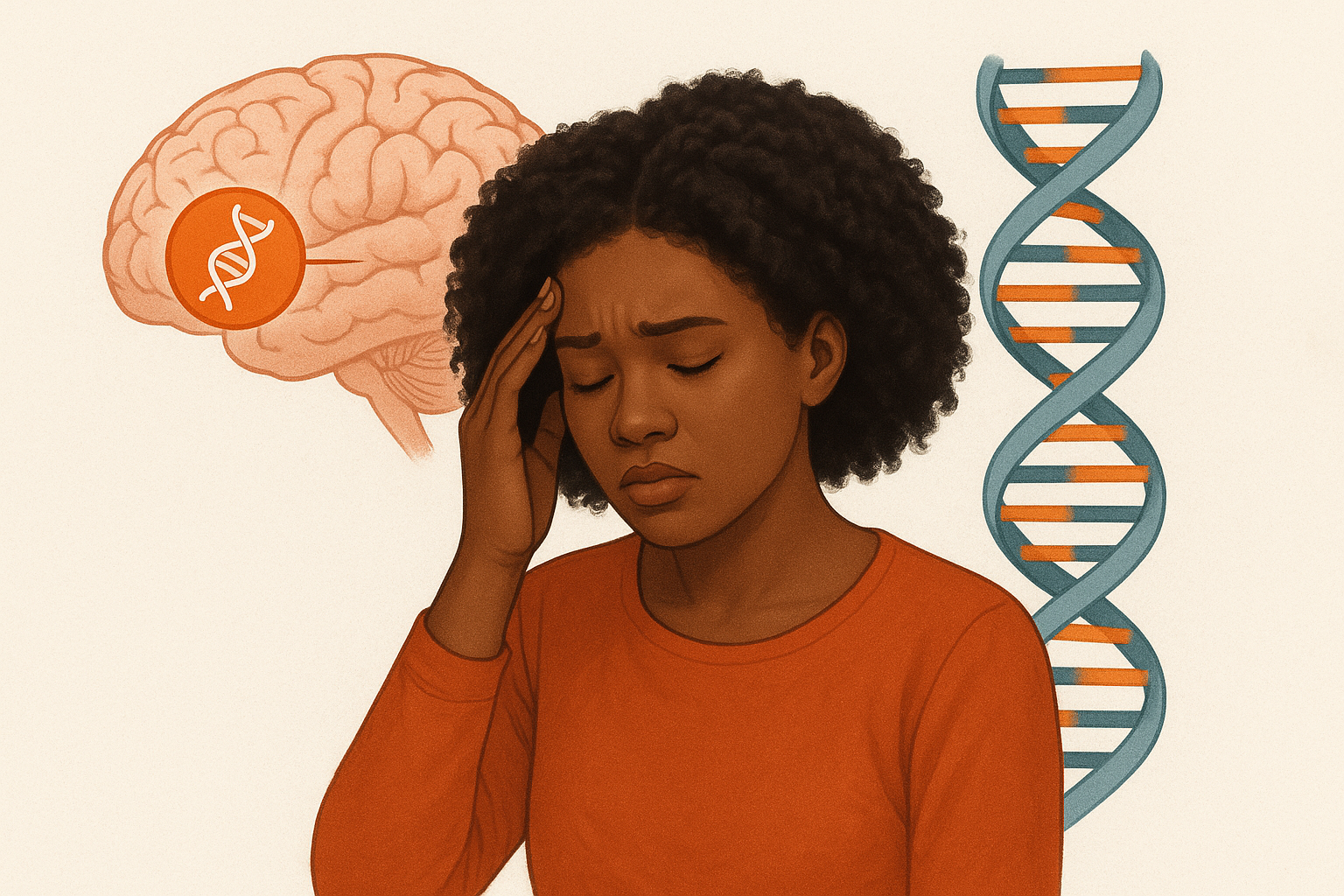
For Black families, centuries of racial violence created chronic activation of stress response systems that could modify gene expression across multiple generations. Your grandmother’s experiences with segregation or your great-grandfather’s encounters with racial terror potentially left biological signatures that influence your own stress reactivity today. This doesn’t mean you’re destined to suffer, but it explains why your nervous system might react more intensely to perceived threats than the situation warrants.
Trauma can literally change how your genes speak, creating echoes that resonate through generations.
Behavioral modeling and learned responses
Biology tells only part of the story. You also learn trauma responses through observation and direct teaching from the adults who raised you. Children absorb their parents’ fear responses, emotional regulation strategies, and worldview without conscious instruction. When your mother flinched at certain situations or your father went silent under stress, your nervous system recorded those patterns as templates for your own responses.
Black parents often teach protective behaviors explicitly, explaining why certain precautions matter. But they also transmit unspoken anxiety and hypervigilance through their own activated nervous systems. Your body learned to match their tension, their scanning for danger, their emotional guardedness, creating automatic responses you now carry into your adult relationships and professional life.
What generational trauma can do to mind and body
The effects of what is generational trauma extend far beyond uncomfortable feelings or difficult memories. Your mind and body respond to inherited stress patterns as if the original threats still exist, creating real physiological and psychological consequences that medical professionals can measure and document. Understanding these impacts helps you recognize that your struggles aren’t personal failings but predictable responses to inherited nervous system programming.
Mental health consequences you can measure
Anxiety and depression appear more frequently in families carrying unresolved generational trauma, particularly when that trauma involves ongoing racial stress. You might experience persistent worry that feels disproportionate to your current circumstances, or depression that conventional explanations can’t fully account for. Your brain learned to expect danger and disappointment, creating default neural pathways that interpret neutral situations as threatening and positive experiences as temporary.
The perfectionism epidemic among Black professionals often traces back to generational survival strategies. Your nervous system tells you that mistakes aren’t just embarrassing but dangerous, that failure could cost you everything. This constant pressure to perform flawlessly creates chronic anxiety and prevents you from experiencing accomplishment even when you achieve your goals.
When your nervous system operates on decades-old threat assessments, even success feels like temporary safety rather than genuine peace.
Physical symptoms that won’t quit
Your body manifests generational trauma through chronic inflammation, cardiovascular problems, and autoimmune conditions that doctors struggle to explain with standard medical models. Research shows that chronic stress exposure across generations contributes to higher rates of hypertension, diabetes, and heart disease in Black communities. Your body stays in fight-or-flight mode so consistently that stress hormones become your baseline, damaging organs and systems over time.
Sleep disorders, digestive issues, chronic pain, and unexplained fatigue represent your body’s rebellion against constant hypervigilance. These physical symptoms aren’t imagined or exaggerated. They’re measurable consequences of carrying inherited stress that your ancestors never had the safety to process or release.
How to break the cycle and start healing
Breaking free from generational trauma requires intentional action and sustained commitment, not just awareness or good intentions. You need practical strategies that address both the biological and behavioral patterns you inherited, creating new pathways that honor your ancestors’ resilience while releasing their unresolved pain. Understanding what is generational trauma intellectually won’t change your nervous system, but consistent practice of new responses can rewire how your brain and body react to stress.
Start with awareness and acknowledgment
The first step involves naming the patterns you’ve inherited without judgment or shame. Notice when your body tenses in safe situations, when you default to emotional shutdown, or when you recreate family dynamics you swore you’d avoid. Write down specific behaviors and responses that feel automatic but don’t serve your current life. This documentation helps you recognize patterns as they happen rather than after the fact.
Share your observations with trusted people who understand the cultural context of your experiences. Breaking silence about family patterns creates space for healing that isolation prevents. You’re not betraying your family by acknowledging pain. You’re completing the healing work they didn’t have the tools or safety to do themselves.
Find culturally aligned support
Traditional therapy often misses the mark for Black families because it ignores the racial trauma component that makes generational wounds unique. You need support that understands how systemic racism amplifies inherited pain and recognizes cultural strengths alongside struggles. Look for therapists trained in Afrocentric approaches who won’t require you to explain or justify your lived experience.
Practice new nervous system patterns
Your body learned hypervigilance through repetition, and it unlearns through repetition of safety cues. Daily practices like deep breathing, grounding exercises, and intentional rest teach your nervous system that constant alertness isn’t required anymore. These aren’t luxuries but necessary medicine for rewiring inherited stress responses.
Healing generational trauma means choosing different responses even when your body screams to follow old patterns.
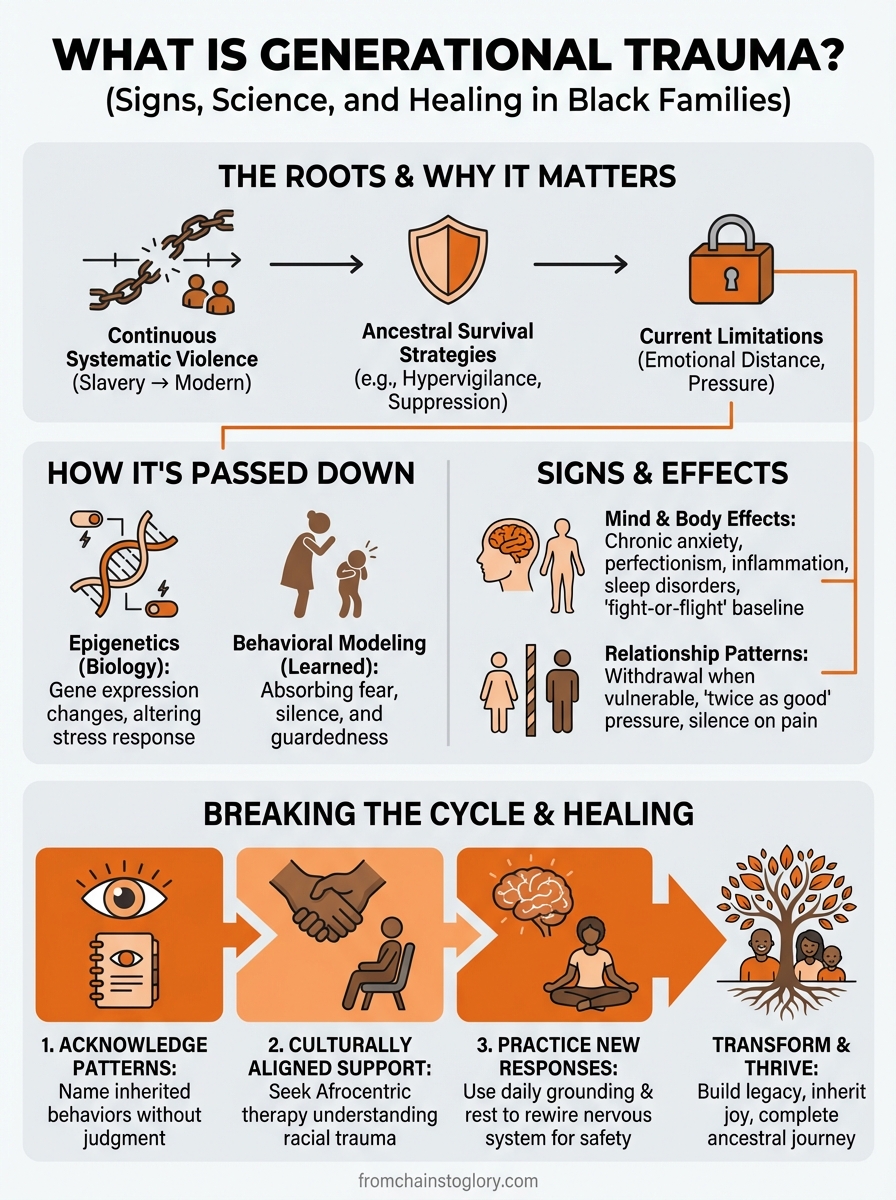
what is generational trauma infographic
Next steps for healing
You now understand what is generational trauma and recognize its signs in your own life. Knowledge creates the foundation, but transformation requires action. Start by choosing one inherited pattern you identified while reading and commit to responding differently the next time it surfaces. Small, consistent changes in how you react to stress or express emotions create new neural pathways that gradually replace old programming.
Healing generational trauma works best with culturally aligned support that honors your family’s strength while addressing their unresolved pain. You don’t have to navigate this journey alone or explain your experience to people who don’t understand the intersection of race and inherited trauma. From Chains to Glory offers Afrocentric therapy designed specifically for Black professionals and families ready to break cycles and build legacy. Your ancestors survived so you could do more than just survive. The healing you start today becomes the inheritance your children receive tomorrow.